Showcasing at Performing Arts Conferences: Part 1
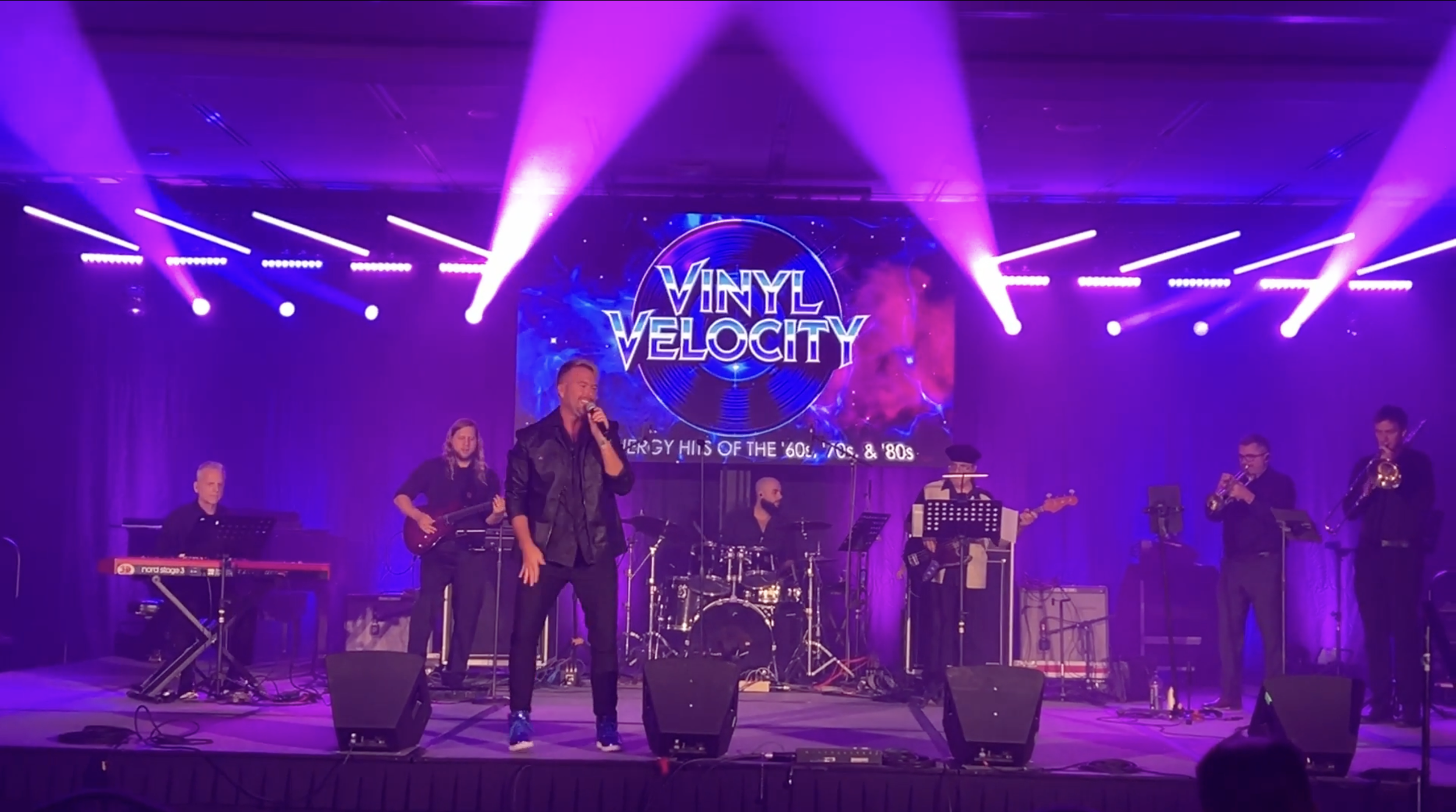
Showcasing at performing arts conferences is a great way to meet theater buyers (called “presenters”) from across the United States. Presenters travel to performing arts conferences mainly to meet with artists and agents, and to watch live showcases.
However, showcasing at a performing arts conference does not guarantee work. Conference showcases are extremely competitive, and like most things in entertainment, not all artists get a financial return on their investment.
This article is intended to assist artists in making that decision for themselves, and to outline the costs involved.
Types of Showcases: Juried vs. Independent
Performing arts conferences offer two types of showcases: juried and independent. Juried showcases are when an artist is selected by the conference committee for an onstage feature. Independent showcases are open to all artists on a “pay to play” basis. Let’s start with juried showcases.
Pros: Juried showcases are ideal for many artists because they guarantee an audience; with most juried showcases, all conference attendees will be present; because the juried showcases are a major function of the conference. That said, having an audience does not guarantee bookings; for example, if a classical artist gets a juried slot, buyers who don’t book classical music will watch the showcase, but will not be interested in bookings. But, the large audience still includes some presenters who would be interested in that act (otherwise they likely would not have been selected).
Cons: The downside, is juried showcases are extremely competitive, and the odds of acceptance are low. For example, one recent conference had 177 applicants for 24 live and 6 virtual slots. Another recent conference had 68 applicants for 12 slots (6 performance slots and 6 short pitches). Odds are generally between 10-20%, and competition is fierce—juried applications draw artists from around the world who have very strong accolades and resumes.
Furthermore, juried showcase applications require significant time from the artist, as they require a lot of materials to be submitted (video demos, marketing materials / EPK, tour riders, etc.). Also, juried showcases tend to select artists with momentum already established—as in, it’s often hard for a new artist to get selected for a juried showcase. Stylistically, juried showcases tend to not select tribute artists; juried showcases are designed in large part to help give less commercial artists (i.e. classical, jazz, theater, dance) the opportunity to be seen.
Finally, juried showcases always have an application fee, typically ranging from $50 to $125 for an application. So applying to numerous juried showcases each year becomes expensive, especially given that most applications won’t be selected in a given year. But, the benefits can still be strong.
Now let’s look at independent showcases.
Pros: Independent showcases have no barrier to entry; you can pay for a slot, and you get to showcase! This is the best part. But, it’s really the only “pro” to independent showcasing.
Cons: Independent showcases do not guarantee an audience. For example, at the Midwest Arts Xpo (MAX), there are always at least 6-8 independent showcases happening at the exact same time. That means, at any moment you could choose to go see a one-woman theater show; a classical string quartet; a Broadway vocalist; a comedian; or probably 3-4 tribute bands—all at the same time. And at APAP in NYC, it’s much more than that—there may be 10-20 showcases at once, plus some people will choose to go attend Broadway shows at night…so you are competing with Broadway and NYC itself!
So the way you get people into your showcase room is by having a very compelling show concept that attracts their interest (see our article here), as otherwise, your room may be near empty. In that way…showcasing is the same as touring! You have to get ‘butts in seats.’
Of course, with that said…an ‘empty room’ does not always mean you won’t get work. If you have one person in your room, and that person books you, then that one booking alone may pay for your showcase! Likewise, a full room does not guarantee bookings either. If the room is full of artists / friends rather than presenters, that may not lead to a lot of bookings (though the extra bodies do help bring energy to the room!).
Let’s examine the cost of showcasing.
The Cost of Showcasing
For all showcases, the first and principal cost to the artist is the travel. No performing arts conferences reimburse travel expenses to artists. You are responsible to pay for your flight(s), hotel, food, etc. for the conference.
Then, for virtually all showcases, you pay a fee for your showcase slot. For a conference like MAX, this varies from just under $1,000 to $1,800+, depending on the room you choose, and the technical capabilities provided. For APAP, this normally will run from $1,500 to $3,000+ depending on the room.
(What do we mean by “depending on the room”? Well some rooms have a grand piano, some don’t; some have an LED video wall, some don’t; some have a large stage that can hold a 10 piece band, some don’t; so there are a lot of variables).
For juried showcases, the showcase fee (typically referred to as a ‘tech fee’) generally runs $200 to $400 for smaller conferences, to $1,000 to $1,500+ for larger conferences.
Then, on top of the travel and the cost of your showcase slot, you will also have the cost of paying your crew / support musicians. For example, if you’re a headline vocalist or instrumentalist who sings with a 5 piece band, you most likely have 5 people to pay, plus their travel (if they’re from out of town), and so forth.
Finally, you have the actual cost of the conference registration itself. If you have an agent, the agency bears this cost. However, if you are a self-represented artist, you will need to purchase an exhibit hall booth in order to showcase. This runs from $500+ at smaller conferences to $1,200+ at larger conferences. Plus, most conferences require the exhibit hall representative to be a member of the conference (which is a separate fee of typically $200-$300 per year).
All told, showcasing can cost anywhere from $2,000 for travel & showcase slots for a one-person, low-tech showcase who has an agency representing them, to $7k-$8k+ for a full band traveling from out of state.
An Example Cost for Independent Showcasing
Let’s look at a vocal or instrumental headliner who performs with a 5 piece band (paid support players) at what their cost might be. We’ll assume they have an agent and do not have any costs of exhibiting, just of the showcase.
Showcase Slot: $1,750
Roundtrip flight for Headliner: $500
Hotel for 2 nights (night before & night of): $400
Ubers / Ground Transport / Food: $250
Support players: $1,250 (assume $250 pp, for 5 local players)
Banner / Promotional Materials: $250
Total: $4,400 for a showcase
That’s an example in which you use local players. If you need to travel in an entire ensemble, then your costs may be much higher. Also, flight costs may vary. Some artists incur costs much higher than the above; others may be below. Some artists also choose to showcase twice, though most artists book just a single showcase slot.
So, How Many Bookings Will I Get?
The answer to this question is…no one knows. And the bigger question it suggests—of “Should I Showcase?”—is important enough that we have an entire article on just that. Read on, here….
Quick Conference Reference
APAP (NYC, January of each year): Independent Showcasing Only (largest conference in the industry)
MAX (Milwaukee, September): Independent Showcasing Only, except for Theater for Young Audiences
WAA (Variable cities, August/September): Juried & Independent Showcasing
The following conferences are smaller conferences:
ArtsMarket Southeast (Durham, NC, November): Juried Showcasing Only
Arts Northwest (Variable cities, October): Juried Showcasing Only
OAPN (Ohio, October, every 2 years): Juried Showcasing Only
MPAC (Montana, October): Juried Showcasing Only (this is a very small conference)
Some states also have small conferences / meetings that allow for juried showcasing, typically targeted to local artists. Minnesota and Tennessee are both examples of this, as they are very small conferences. There are also conferences across Canada, though these typically don’t draw as many American artists, in part due to the currency / fee differences between Canadian presenters and U.S. presenters.
What gets you booked in PACs?
Why do you not get work from a showcase? What determines if people come to your room?
Attending a conference before you showcase can be helpful.
Marcato is here to help you succeed and strategize. Our mission is to introduce presenters to new artists and to support a healthy performing arts industry where artists of all genres and backgrounds have an opportunity to be discovered and become commercially successful.
