How Much Can I Make on Tour?
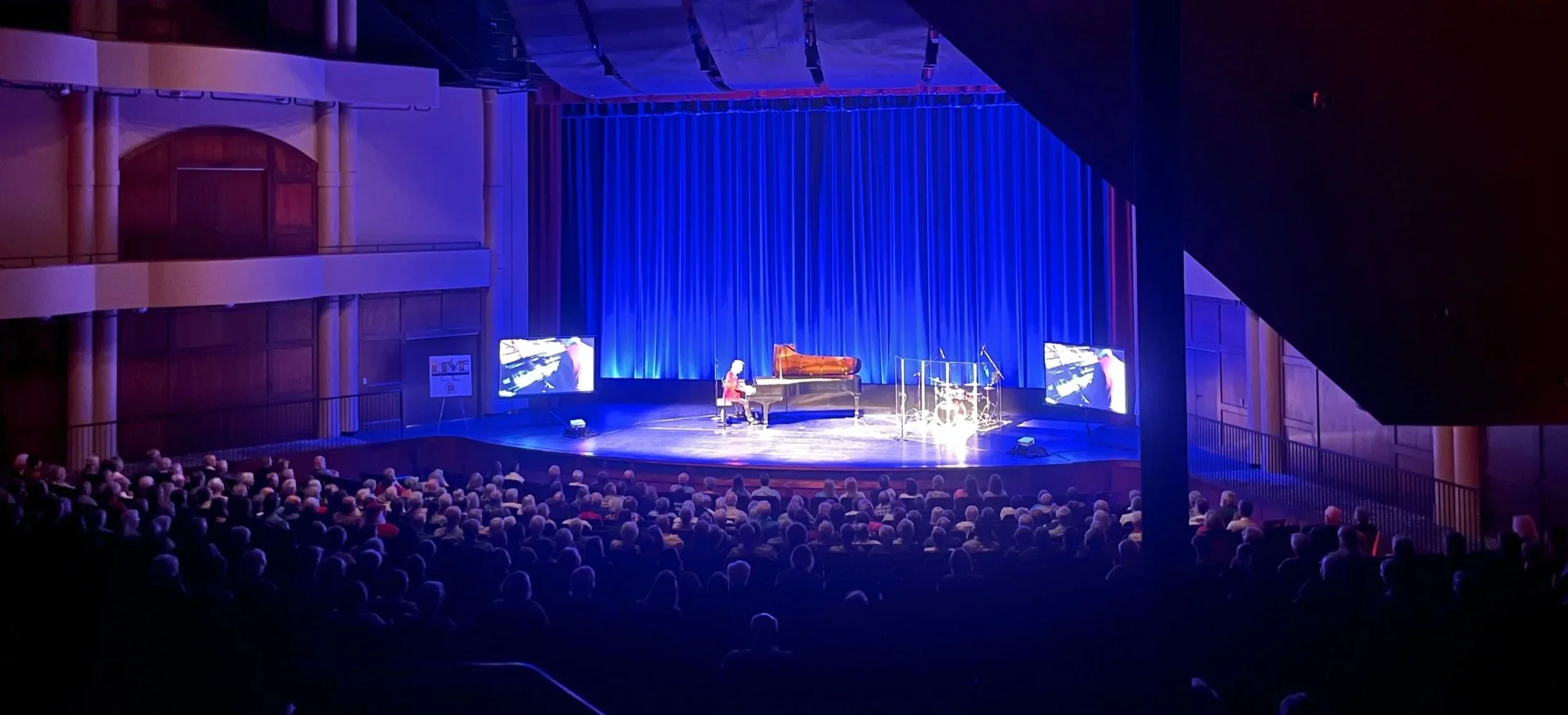
Let’s look at the basic earning potential for a touring show in the performing arts market. This means shows like jazz, classical, dance, theater, folk, bluegrass, or tribute bands.
Generally speaking, an artist can earn somewhere between 50-60% of the total gross tickets of a concert (excluding ticket fees). This is true even for shows with a guarantee or flat fee (which is the most common for lower and mid-tier artists); the buyer will be able to offer roughly 50-60% of the gross that they expect to sell. (In some situations they can offer more, but we’ll cover that later).
The remaining amount is typically covering marketing, front of house staff, technical team, backline rental, hospitality and catering, rent / overhead, and (hopefully) profit for the presenting venue!
Let’s say you are a newer tribute show that can command a $35 ticket price. And suppose you come to a theater and sell 250 tickets. That’s a total gross of $8,750 ($35 × 250 = $8,750).
Based on 50-60% of that fee, you can expect to make $4,375 to $5,250. But remember, that’s your gross, not your net.
First Cost: Agency Commission or Sales Overhead
Performing arts agencies typically take 15-20% of an artist fee. This is higher than the music industry norm of 10%, due to the unusual overhead involved in performing arts booking (attendance at numerous national booking conferences—which is tens of thousands of dollars a year for an agency).
While you can work the market without an agent, you’ll typically need to invest thousands of dollars yourself in attending booking conferences, since so many theater bookings operate through in-person relationships.
Obviously, many venues do book from artists / agents they haven’t met in person…but you’ll typically need to send hundreds of emails to land a single date (not to mention your time researching venues first!), which is a significant overhead cost in your time.
(And before you just plan to have an AI agent do this for you…bear in mind that theater managers receive hundreds of emails a day, many of which end up deleted or ignored…and this was true before AI made mass email even easier).
Ultimately, in the performing arts, there’s no substitute for genuine relationships, in booking artists.
So after considering commissions (or your own sales overhead), you’re looking at approximately $3,700 to $4,500 for a show that sells 250 tickets at $35 (which, by the way, is impressive if you can do that as a new show!).
And before you say “Well I can sell more tickets / a higher price than that!”, ask yourself, how many times have you done that in the past year, and in how many different markets? Just because you sold 500 tickets in one specific market with a very dedicated audience, doesn’t mean you can do those numbers nationally.
This is a conversation I have with so many artists—your ticket expectations are not based on your highest selling show, they’re based on your average ticket sales (in a particular market). If you haven’t worked a particular market recently, buyers will estimate your tickets more conservatively, and based on their in-house data on their audience. They don’t want to lose money!
Next Cost: Travel
But now let’s talk about travel. As in the performing arts market, your hotel rooms are normally covered, but not your travel.
So if you have a one-off date, your $4,500 fee can easily be eaten up entirely by travel cost (i.e. 4-6 flights), before you even pay your musicians / team members!
Even if you drive, you need to then account not just for gas but for traveltime and the costs of taking days off work, and so on. And if you wish to tour nationally—not just within your region—travel will become essential.
So, how do you actually make money from touring?
It’s All About Scale
Suppose you created a show of a 5 piece band (you + four others). You, the creator and “star” of the show, pay your players $300 per show, plus a $100 per diem for the travel days. If you do one show (travel, show, travel), you pay $500 per player. But if you do three shows (travel, show, show, show, travel), you pay $1,100 per player—only about twice, not 3x, as much.
If we also assume that you had to fly for these shows - so 5 flights at $400/flight, your costs go up quickly. Let’s assume you have a show where you were paid $5,000 and have a 20% agent commission. In this example, one show looks like this:
$4,000 Gross to Artist
($2,000) Payments to Band ($500 × 4 players)
($2,000) Flights ($400 × 5 flights)
($250) Ground transportation (rental van + gas)
Net: Loss of $250 on the show
That obviously doesn’t work. And those are numbers if you are selling a few hundred tickets! But now let’s replace that with three shows in one region, and you see the numbers quickly change:
$12,000 Gross to Artist
($4,400) Payments to Band ($1,100 × 4 players)
($2,000) Flights ($400 × 5 flights)
($600) Ground transportation (higher because it’s a longer run, and more gas)
Net: Profit of $5,000 on the run
So as you can see, the money you make in touring boils down to the scale you can create. Even booking 3 shows instead of 1 in a market makes a major difference. Do that 10x, and suddenly you start seeing real profit.
Of course, remember these costs are your direct cost of touring only. All touring shows require production, rehearsal, and marketing/overhead cost—which are separate costs that you must account for.
The point: To make money, you need to book a lot of shows, sell a lot of tickets, and keep your touring costs reasonable.
Some Additional Considerations
There are two scenarios in which you may not be constrained by the above typical '“show math”: subscription series and mission-based programming.
With subscription series, a venue will sell your show as part of an overall subscription, meaning that you may be one of 5-10 shows that the audience buys at once. In these cases, the audience typically comes year after year to see all of the shows, regardless of what the show is. Thus, you may end up with a built-in audience of 600-1,000 people even if on your own, you’d normally sell just 200-300 tickets. This can enable better fees to you as an artist, and can open up the possibility for one-off flight runs, for example.
The catch, of course, is that this is less common than one-off show sales. While many, many venues offer “seasons,” it is more common to have venues offer a “pick 5” or “pick 10” season package rather than selling every show in one season. But, these subscription series do exist, and there are many of them!
Mission-based programming is the other. An example of this are programs that explore history, racism, identity, and so forth. These are programs that arts buyers know, or expect, will not be commercially profitable, but that are important to present to the community—aka mission-based. In these cases, arts presenters will book these shows with less regard to the profit potential, knowing that the show is inherently important for members of their community. However, only certain shows fall into this category, and the budget is still going to be on the smaller side, just without as much concern on the math shown above.
Getting Help & Direction
Navigating the economic complexities of the touring industry is hard. From the marketing demands of trying to sell tickets to the financial planning needed to ensure your tour is economically viable, to the complexities of developing a good technical rider, Marcato Artists is here to help.
We are proud to be the first agency in the performing arts market dedicated specifically not only to representing our own exclusive roster but also to supporting and coaching new aspiring artists on how to enter this difficult but rewarding performance space.
If you are interested in presenting a show in the performing arts market, and have the long-term commitment, flexibility, and the financial resources to develop your vision, reach out to us and we’d love to chat.
Human Authorship Disclosure
This post was written entirely by a human who has 8 years of experience in the national performing arts touring market, and 16 years in the music industry in general. This post was not written by or using AI. It contains actual real-world experience from a human who knows and works with theaters all across the country.
