So You Want to Tour the Performing Arts Market
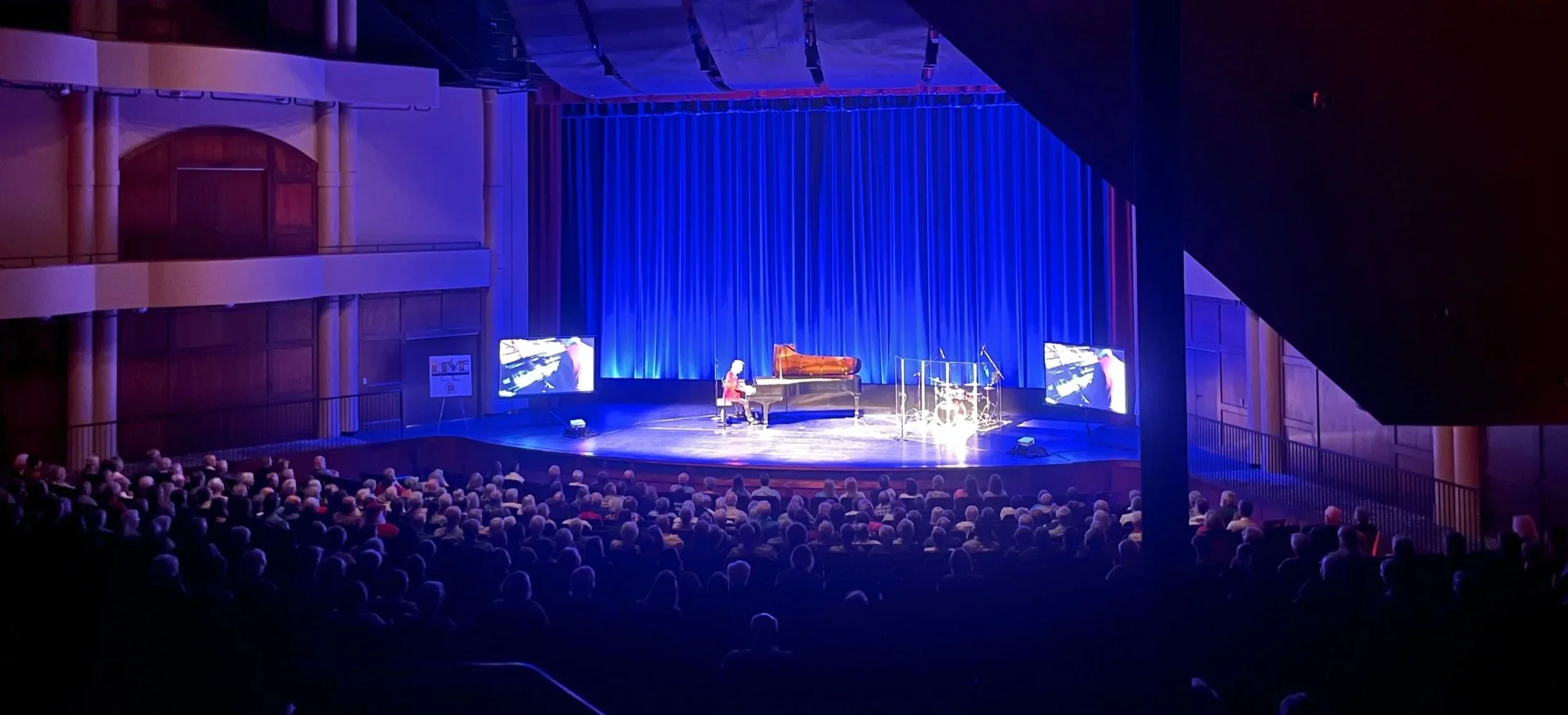
Touring the United States is a dream for many! Let’s explore some realities of what you need to be successful in touring the United States. Here we focus on public ticketed concerts (as opposed to other paid gigs that aren’t ticketed).
First off: To make money as a touring artist, you have to sell tickets. And that’s often harder than you think.
There are two basic ways you can sell tickets. One is to have your own fanbase, who buy tickets to your shows. Famous artists do this; and countless independent artists do too! But you’ll need a fanbase in the hundreds of thousands to make “liveable” money doing this.
The other way to sell tickets is to have a show product with wide market appeal, and sell to someone else’s audience—i.e., to a performing arts center and their patrons. However, bear in mind that you will be competing with thousands of other artists for a spot on a venue’s lineup. And even when you get it - you still have to sell tickets to individual patrons.
And unfortunately, the competition for entertainment attention is now more intense than ever. In 2026, you are competing not just against other events, but also against Netflix, video games, and extremely busy personal lives.
So to succeed in today’s market, you need a stronger show concept than ever before. And that brings us to our first takeaway that will surprise most artists:
The most critical element to making a living on tour is not how good your show is—it’s whether you have a show concept that sells tickets.
If you cannot sell tickets, then buyers cannot book you. The money to pay you has to come from somewhere! So, let’s talk now about how to create a strong show concept.
Finding a Great Concept
One of the most obvious examples of a strong show concept is a tribute show. Generally, tribute shows are not impersonation shows, but rather are ‘themed’ shows focused around a particular artist. And tribute shows sell well, generally speaking.
It’s similar to how Hollywood has found that remakes, sequels, and spinoffs sell better than new original stories. The reality of the 2026 entertainment industry is that familiar sells.
However. Because tribute shows sell well—and are a commonly produced idea—there are lots of them out there. So the competition for the dates is fierce. And many venues will be loyal to a specific previous tribute band they’ve worked with—as in, if you form a Beatles tribute, you’re likely to find that many theaters already have an existing Beatles tribute they work with.
So one of the keys if you are considering forming a tribute band is to determine whether the market can support an additional tribute show for that artist or not—and you want to look not just at how many tributes are out there, but at how many tickets they are selling. As that will determine how much you could make.
Of course, tributes are not the only show concepts that sell well. Some shows have other thematic concepts—such as The Rock Orchestra (a show that celebrates rock and metal music with live classical musicians). Candlelight shows are becoming increasingly popular. Celtic shows are popular as well (yes, there’s even a Celtic Candlelight show). Dueling Pianos is a popular concept, though more for bars and clubs.
Perhaps the most important takeaway is, before investing tens of thousands of dollars into a new show, you should consult with experienced industry professionals who are familiar with the market, and who can advise you on the market potential for your vision.
As no matter how good you are onstage, if your show doesn’t sell tickets, you won’t make money.
Understand the Money
Last of all, let’s look at the basic earning potential for a touring show in the performing arts market. As in, shows like jazz, classical, dance, theater, folk, bluegrass, or tributes.
Generally speaking, you can expect an artist to earn somewhere between 50-60% of the total gross tickets of a concert (excluding ticket fees). The remaining amount is typically covering marketing, front of house staff, technical staff, backline rental, hospitality and catering, rent / overhead, and (ideally) profit for the presenting venue, which is taking on the risk!
So let’s say you are a tribute show that can command a $35 ticket price. Let’s suppose you come to a theater and sell 250 tickets. That’s a total gross of $8,750 (we’re assuming ticket fees are on top of the $35).
Based on 50-60% of that fee, you can expect to make $4,375 to $5,250. But remember, that’s your gross, not your net.
Performing arts agencies typically take 15-20% of an artist fee (this is higher than the usual 10% music industry standard, and reflects the unique costs of attending performing arts conferences and memberships - tens of thousands of dollars a year - which is where much of the performing arts bookings take place). The performing arts industry is extremely relationship-driven (buyers generally work with existing agencies they know and trust), and that trust requires years of investment to build.
So after considering commissions, you’re looking at approximately $3,700 to $4,500 for a show that sells 250 tickets. Bear in mind that in performing arts bookings, your hotel rooms are normally covered, but not your travel.
So if you have a one-off date, your $4,500 fee can easily be eaten up entirely by travel cost (4-6 flights depending on your group size), before you even pay your musicians!
Even if you drive, you need to then account not just for gas but for travel time and the costs of taking days off work, and so on.
So, how do you actually make money from touring?
It’s All About Scale
Whether you are an artist or an agency, making good money in the performing arts—something we all seek and deserve!—requires scale. Scale means that you take one product and sell it many times, bringing cost efficiency and thus more profit.
So for example, suppose instead of selling one show in a market that does an $8,750 gross (and makes you $3,700 to $4,500 of margin before your expenses), you sell three shows in one market.
So now you are looking at between $11,100 and $13,500 for that run, with nearly identical travel cost. This can mean the difference between losing money on tour and making thousands. Let’s walk through a simple example.
Suppose you are a singer and show creator who has a 5 piece band (you + four others). You pay your players $300 per show, and then a $100 per diem for the travel days. If you do one show (travel, show, travel), you pay $500 per player. But if you do three shows (travel, show, show, show, travel), you pay $1,100 per player. That’s just over twice as much - not three times.
If we also assume that you had to fly for these shows - one flight to one major metro, then you played 3 shows that were all driveable from that metro - you can now see where the scale works out again. Say you have $400 per flight, for the 5 flights.
In this example, one show looks like this:
$4,000 Gross to Artist
($2,000) Payments to Band ($500 × 4 players)
($2,000) Flights ($400 × 5 flights)
($250) Ground transportation (rental van + gas)
Net: Loss of $250 on the show
But now replace that with three shows, and you see the numbers change:
$12,000 Gross to Artist
($4,400) Payments to Band ($1,100 × 4 players)
($2,000) Flights ($400 × 5 flights)
($600) Ground transportation (higher because it’s a longer run)
Net: Profit of $5,000 on the run
So as you can see, the money you make in touring boils down to the scale you can create. If you can book a lot of shows, then you can make money rapidly and consistently. If you can’t, you will end up losing money—especially as the above numbers don’t consider any of your marketing or overhead cost, just the direct cost of touring.
Conclusion
So at the end of the day, the most important thing to be successful in the performing arts market is to have a show that lots of theaters want to book, that lots of patrons want to buy tickets to, and that has the lowest possible touring cost, without sacrificing the artistic quality of the show.
As of course, as soon as you can start selling tickets at much higher numbers—500, 600, 700+ tickets—the dollars go way up. Take for example a show that sells 600 tickets x $45/ticket average:
600 x $45 = $27,000. At 50% = $13,500; at 60% = $16,200.
Also, if you’re able to travel with your own backline (drums, guitars, keyboards, etc.), you can often get a higher fee from the venue, since they don’t have to rent that equipment for you.
Getting Help & Direction
Navigating the economic complexities of the touring industry is hard. From the marketing demands of trying to sell tickets to the financial planning needed to ensure your tour is economically viable, to the complexities of developing a good technical rider, Marcato Artists is here to help.
We are proud to be the first agency in the performing arts market dedicated specifically not only to representing our own exclusive roster but also to supporting and coaching new aspiring artists on how to enter this difficult but rewarding performance space.
If you are interested in presenting a show in the performing arts market, and have the long-term commitment, flexibility, and the financial resources to develop your vision, reach out to us and we’d love to chat.
Human Authorship Disclosure: This post was written entirely by a human who has 8 years of experience in the national performing arts touring market, and 16 years in the music industry in general. This post was not written by or using AI. It contains actual real-world experience, not GPT hallucinations, from a human who knows and works with theaters all across the country.
